

Designing Cities that Honor Time, Not Just Speed: A Care-Centered Vision for Urban Futures- Article By Niharika Agarwal, Partner and Kaushani Chakrabarti, Senior Associate
Imagine Meena: a garment worker on the outskirts of Bengaluru. Her day begins before the sun rises. She walks her youngest to a neighbour’s home-turned-crèche, then boards a crowded bus. Three transfers and two hours later, she reaches her factory. By lunch, her phone buzzes: her mother-in-law’s blood pressure is high again. After her shift, she waits for a delayed bus, squeezes into it with sore legs and aching arms, and finally gets off three stops early to buy subsidised ration rice. By the time she’s home, it’s dark. She cooks, cleans, and begins again the next morning.
This isn’t a simple commute. It’s a care circuit. Repeated by millions of women daily, stitched together not by design but by survival.
This care circuit is a byproduct of infrastructures disregarding the non-linear schedules that women follow on a regular basis. Their daily routes do not follow a straight line from home to work, but spiral through schools, clinics, markets, and ration shops. Urban planners may call this ‘trip chaining’; women call it life. These fragmented journeys reflect systemic failures: essential services are too far apart, care work is invisible, and public infrastructure is designed around male-coded patterns of work. For low-income women, time becomes a tax: extracted in kilometers walked, hours waited, and safety risked.
The statistics are compelling and powerfully highlight the gap. Women perform over 76% of all unpaid care work globally, says the ILO. In India, they spend nearly 352 minutes per day on unpaid care, compared to just 52 minutes for men.
These aren’t abstract numbers, but they represent stolen hours, lost opportunities, and exhausted bodies. And in cities with weak infrastructure, the time spent on care responsibility, unreliable public transport, unsafe streets, distant services, and no public childcare make daily survival a full-time job. Effective cities designed with an embedded care lens reimagine proximity not as luxury, but as a right, promises to solve for women’s care work.
Cases in Point: Bogota & Paris
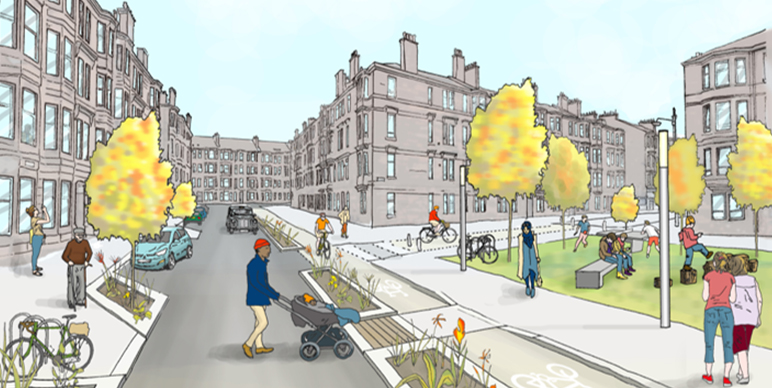
Bogota’s ‘Barrios Vitales’ (Vital Neighborhoods) is a powerful example that endeavours to create ‘citizen neighborhoods’. Here, the main objective remains to create an environment wherein citizens have a fair and equal access to every function and amenity of the city. Some of the prominent initiatives that help execute this commitment and objective on ground are:
- Including citizens in the development of Barrios Vitales through tactical urbanism.
- Enhancing the infrastructure for pedestrian and cyclists.
- Creating school zones, school lanes.
This helps solve two things: it integrates childcare into the neighborhood as well as ensures safety of roads that surround these local schools.
Similarly, ‘Paris en Commun’ is actively seeking to build a neighborhood that is readily able to provide six basic things to its citizens including housing, employment, education, healthcare, shopping, and entertainment.
To achieve this vision, Paris started to…
- Convert schoolyards for multifunctional use
- Convert roads to cycling paths on major routes such as ‘Rue de Rivoli’
- Develop ‘citizen kiosks’ or local community houses, among others.
While the above initiatives demonstrate a greater focus on green mobility and equal access to city services at the surface level, there is an underlying care lens across various aspects of the design.
By integrating key city functions into a single neighborhood and placing childcare and healthcare systems within reasonable reach, cities can better support residents.
Most importantly, involving citizens (particularly women) in the design process helps ease the societal obligation of care work, which often falls on women. In Bogotá, for example, women undertake 75% of care-related trips but only 42% of work-related trips. Cities designed in this way allow women greater opportunity and flexibility to either participate in or continue their roles in both the formal and informal economy.
Why Proximity Is Political
For women, mobility isn’t linear, it is circular, fragmented, and defined by care. In developing countries , studies reveal that women make more frequent, shorter trips with multiple stops, while men tend to follow more direct, linear routes focused on work commutes. This results in longer overall trip times for women, despite traveling shorter average distances. On the other hand, in developed countries like Spain, women spend up to 13% more time commuting via public transit than men not because they travel farther, but because their days involve multiple unpaid tasks and more transfers.
Cities designed with a care lens disrupt this logic. Clustering schools, clinics, fresh food markets, and elder care near housing and workplaces chips away at the time tax. Studies in the past have already revealed that easier access to childcare and flexible work arrangements positively impact mothers’ ability to participate in the workforce. Therefore, it is vital to note that designing caring cities do not only demonstrate convenience, but they also uphold economic justice and gender parity.
From Beneficiaries to Co-Creators
However, proximity alone does not guarantee equity. If urban design processes exclude women, especially those from informal settlements, LGBTQ+ communities, or caregiving households, cities risk replicating the same inequities in a more walkable shell.
Women must be treated not just as beneficiaries, but as co-creators of infrastructure to effectively embed a care lens. Planning that includes women meaningfully, from community walk audits to zoning boards, results in safer streets, better mobility, and more responsive services. Tools like the ‘Her City Toolbox’ are already enabling this by using participatory design to amplify women’s voices at every stage of city-making.
Building Infrastructure with Gender in Mind
To support this shift, we must embed gender responsiveness into national and municipal infrastructure policies. This means funding child-friendly transit, mandating mixed-use zoning that supports informal vendors and care workers, and planning with an understanding of care networks, not just commute corridors.
But design is only as good as the data it rests on. Too often, we lack gender-disaggregated time-use data at the local level, making women’s mobility patterns and caregiving work invisible. Without such data, care needs remain unaccounted for in budget allocations, urban masterplans, and transport modelling.
Reclaiming Urban Planning for Care
To build cities that truly work for all, we must embed a ‘care-first lens’ into urban planning, zoning, financing, and governance. Here are six actionable interventions that can help make infrastructure more inclusive and effective for women:
- Introduce care credit systems: Introduce digital ‘care credits’ for volunteering in community caregiving, redeemable for subsidised childcare, public transport, or services.
- Establish night-care hubs in dense employment zones: Set up decentralised, 24-hour childcare and eldercare centres near industrial areas, hospitals, and transport hubs to support night-shift workers, especially women in manufacturing, healthcare, and security sectors. These hubs could be operated through public–community partnerships, offering affordable, safe, and reliable care.
- Introduce tax incentives for care-conscious employers: Offer local tax rebates or fast-track approvals for companies that provide on-site childcare, shared transport for employees, or flexible work schedules aligned with school hours. Encourage co-location of care services in industrial estates and business parks.
- Pilot community care exchanges (urban time banks): In dense urban neighborhoods, launch mobile-based ‘care exchange’ platforms where residents can trade caregiving hours (for childcare, elder support, tutoring, etc.) through a simple credit system. Participants earn credits for the hours they contribute, which can later be redeemed for care when they need it. These time banks build local trust, reduce caregiving costs, and can be supported through municipal recognition, small utility rebates, or SHG-led management.
- Create a municipal care fund: Dedicate a small share of city revenue (for example, 0.5–1% of the municipal budget or 1% of property tax) and blend it with CSR and state matching funds to finance locally managed care infrastructure. This fund can support women’s self-help groups (SHGs) to run community crèches, kitchens, safe-path upgrades, and pilot programmes that reward performance and innovation.
- Transform community childcare centres in urban care hubs: Upgrade existing neighbourhood childcare centres into extended-hour care hubs offering early learning, nutrition services, and tele-health linkages. Pool municipal and state budgets and partner with local health centres and NGOs for staffing, outreach, and quality assurance.
Global success stories offer a powerful blueprint. When essential services, economic hubs, and green spaces are brought closer to where people live, women gain more than convenience. They gain autonomy, economic opportunity, and dignity.
Urban planners must, therefore, shift from designing for speed to designing for usefulness, prioritizing proximity, safety, affordability, and shared infrastructure that recognizes the invisible labour of care. Only then can our cities truly work for women and by extension, for everyone.
Related Articles
Our Impact Map