

Why the Circular Economy Is the Only Fair Economy
The current economic system works on the simple logic of take, make, waste. Extract resources, manufacture products, discard them. This cycle repeats, creating growth but also creating mountains of waste and resource scarcity.
Only 7.2% of the global economy is circular today, meaning over 92% of what we extract from the planet becomes waste, pollution, or is permanently lost. In just the last five years, the world consumed 500 billion tonnes of materials, nearly as much as was consumed during the entire 20th century. Last year, we hit the Earth Overshoot Day on July 24, meaning we spent the remaining five months of the year in ecological debt. Currently, humanity is using nature 80% faster than Earth’s ecosystems can regenerate, meaning we effectively need 1.8 Earths to sustain our current way of living.
This is not just an environmental crisis, but also a justice crisis. High-income countries consume nearly ten times more resources than low-income ones, yet the extraction burden and environmental cost are disproportionately borne by the Global South. The linear model doesn’t just waste resources, it concentrates them in hands of a few. A small slice of the world consumes the majority of what the planet offers, leaving the rest to compete for what remains.
A circular economy isn’t only about recycling or green design. At its core, it is a proposal for redistribution of resources and access. When we close loops through reducing, reusing, repairing, recycling or regenerating we stretch finite resources further, and in doing so, more people get a piece of the pie.
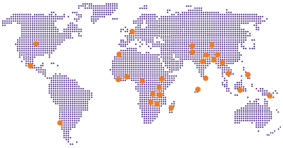
Our Impact Map