

What a Decade of Listening Across Two Continents Taught Me about Why Impact Measurement Systems Fail
Over a decade of fieldwork across Africa and South Asia from health system evaluations in South Sudan to agricultural scheme reviews in Rajasthan. I have learned that the most useful data rarely shows up where you expect it. It shows up in the aside, the hesitation, the answer that doesn’t quite fit the question on the guide. The best insight in a key informant interview is rarely the answer to the question you asked.
This is the instinct I now bring to a very different kind of work: helping enterprises build Impact Measurement and Management systems. It is tempting, I have noticed, to hand out to a growing enterprise a sophisticated indicator framework and assume the hard part is done. But an enterprise cannot manage what it has not yet learned to see. Before a business can track outcomes, it needs the habit of noticing the same instinct that made her years of interviews useful in the first place. Good measurement, like good listening, is built slowly, not installed.
My own path from evaluation to program management to advisory has reinforced a related discipline: resisting the one-slide summary. Development work is full of pressure to compress complexity into a clean recommendation. But the enterprises, ministries, and communities I have worked with rarely fit one slide. The skill I now value most isn’t synthesis for its own sake; it’s synthesis that keeps enough of the original texture alive to still be true.
Ten years in, I believe the throughline connecting fieldwork and impact advisory is the same: real insight comes from staying curious a little longer than the framework requires.
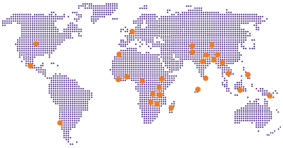
Our Impact Map