

The Most Underrated Skill in Building a Carbon Project: Managing Uncertainty
When I first started working on carbon projects, I believed I would be part of driving visible and tangible change on the ground. The logic felt straightforward: design the right intervention, mobilize communities, measure impact, and scale. But what I underestimated was time; not as a constraint, but as a fundamental feature of working with nature and communities.
Carbon projects don’t operate on business timelines. Trees take years to grow, soil takes seasons to respond, and behavior change within communities unfolds gradually. What feels slow is often exactly what makes these systems resilient.
Over time, I’ve realized that one of the most underrated skills in this space isn’t technical expertise but the ability to sit with uncertainty without trying to force speed where it doesn’t belong. This shows up in everyday decisions. Choosing conservative assumptions when early data looks promising. Staying committed to farmer engagement even when adoption is uneven. Recognizing that not all impact is immediately measurable and resisting the urge to over-claim.
It’s difficult to align with reality especially when you’ve designed what looks like the perfect project on paper. The models work, the projections are compelling, and the pathway to scale seems clear. In these moments it’s important to stay true to your stakeholders (specially your investors!) about what is working and what is not because integrity in carbon projects is not built by prefect plans but on the ability to continuously adapt.
In carbon markets, where pressure to deliver credits and scale quickly is high, the real challenge is to build projects that can withstand time because in the end, carbon projects are not just about generating carbon credits but strengthening livelihoods, creating behavioural change and delivering lasting impact.
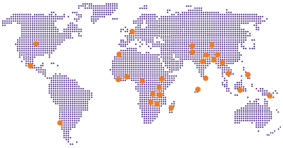
Our Impact Map