

Fashion cannot be sustainable without circularity and the people behind It
The Thread We Keep Dropping
Here is a thought that should stop every sustainability professional in their tracks: fashion’s climate crisis is not primarily an energy problem. It is a materials problem. Majority of global greenhouse gas emissions are tied to how we extract, use, and discard materials. Fashion, the world’s third most polluting sector, draws its raw inputs from the top two polluting sectors: agriculture & allied industries (cotton, silk etc.) and fossil fuels (polyester). Clean energy, while necessary, is not sufficient. The problem runs deeper, into the very logic of how we make, use, and throw away. Every year, India manages ~7000 kilo tonnes of textile waste. Let that number sink in.
Linear business models i.e. make, sell, discard are fundamentally incompatible with a finite planet, experiencing exponential demand. Circular Economy is not one solution among many. It is the only unified framework that can simultaneously address mitigation and adaptation, across the full arc of the climate challenge.
But, just frameworks don’t recover waste. People do.
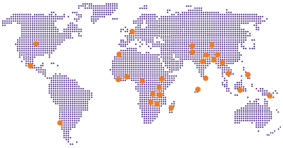
Over five years, under our Closing the Loop on Textile Waste (CTL) Program, we have built India’s first scalable Circular Textile Waste Management model through creating a pan-India network of hyperlocal Textile Recovery Facilities (TRFs). And the most profound lesson from building this model has been this: circularity only works when it is place-based and people-centered. The workers across this value chain i.e. collectors, sorters, and processors who transform discarded textiles into reusable, repurposed, recyclable materials, are not a footnote in this system. They are its backbone. And this backbone can be strengthened only if the economics of textile waste collection and management works. Making this model economically viable is contingent on a few factors:
- Design the solution model for and with the waste pickers
- Partner with local governments intentionally
- Create market linkages that valorize textile waste, and
- Help Textile Recovery Facilities (TRFs) transition into viable secondary material businesses
Then only the loop begins to close. The 3Ps i.e. People, Planet, Profit are not a trade-off. They are a design brief. The fashion industry’s future depends on getting that design right, from the ground up.
Our Impact Map