

Food In Peril: Urgent action required for a trusted climate data ecosystem
As climate risks accelerate, food system resilience will increasingly depend on our ability to build and use robust data ecosystems. Today, much of agriculture still operates on fragmented, delayed, or generalized information—making it difficult for farmers, financial institutions, and policymakers to respond effectively to climate variability.
A unified, structured, and trusted data ecosystem can change this paradigm. By integrating high-resolution weather data, satellite imagery, soil health metrics, and farm-level practices, we can move from reactive to predictive decision-making. This enables more precise advisories for farmers, dynamic risk assessment for lenders, and better-targeted interventions for governments.
However, the real challenge is not just generating data, but ensuring interoperability and trust. Data must be standardized across platforms, accessible across stakeholders, and validated through credible systems such as digital MRV frameworks. Without this, even the most advanced datasets remain underutilized.
Building such an ecosystem requires collaboration across public institutions, private players, and technology providers. It also requires embedding these systems into existing digital public infrastructure to ensure scale and inclusivity.
Ultimately, resilience will not be built solely through new technologies or financial products, but through the invisible backbone of reliable, shared data that enables smarter, faster, and more equitable decisions.
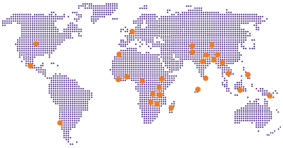
Our Impact Map